


When you put something on a scale, you want to get the right amount.
But are you sure that number is right?
Over time, scales can get out of whack. They don't work as well if they are moved around a lot, or if the temperature changes, or if they don't get enough care.
The difference may not be obvious at first. But a small error in the measurements can turn into a problem much bigger in magnitude when the tool has been used a lot.
This is where mass prediction comes in handy.
What Is Mass Calibration?
One very simple way of making sure your scales are right is to test them on a lot of people at one time.
A trained calibrator compares your tools' readings to a standard that everyone knows. This helps them know if the measuring tool is working or if there is a problem that needs to be fixed.
A paper record with the results is given to you after the calibration.
Simply put, tuning gets you one important thing: What does the number on my scale mean?
Do you have the right scale?
Think about how often your business needs numbers.
You could weigh raw materials, check how much of the finished product there is, measure ingredients, keep an eye on the process, or weigh things to test them before you start making something.
If the number is off, everything that depends on it can go wrong.
For example, using the wrong weight could lead to
- Putting in too much or too little
- Not enough of the products
- Costs of products going up
- Trouble making things
- Quality issues
- Mistaken records
- Test reports that can't be trusted
A small mistake might not seem important at first. If it happens more than once, tho, it might hurt more.
Which Equipment Can Be Calibrated?
There are different ways that businesses use tools for measuring weight and mass.
Based on your needs, mass balancing could help with the following:
- A scale to measure weight
- Scales with high accuracy
- Scales for labs
- Weights to help you remember
- Flow meters to measure mass
- Scales of Coriolis
- Rules for mass flow
- Other ways to measure mass
The way you calibrate your tools will depend on what kind of tools you have and how accurate they need to be for your job.
How Do You Know If Your Equipment Needs Calibration?
You don't always have to wait until the machine is turned off to check that it's still right.
There are times when equipment may look fine, but its readings become less accurate over time.
These are some signs that you should check your gear.
1. The numbers don't seem to be right.
You should check if the same thing's weight changes a lot from one time to the next.
2. The tools have been moved.
Once a scale or balance has been moved, it may not work as well. This is especially true when you need to take accurate measurements.
3. The tools have been fixed.
Have you recently had your gear fixed or cleaned?
If you calibrate it after you're done, you can help ensure that it's still measuring accurately.
4. A lot of people use the tools
Things that are used all day may start to show more signs of wear over time.
You can keep an eye on how accurate it is by calibrating it.
5. It is time to get a new testing certificate.
If your company has a normal calibration plan, don't wait until the last minute.
When your testing records are up to date, it's easier to keep track of your tools and quality needs.
What does calibration involve?
You might think that all it takes to calibrate a scale is putting something heavy on it and seeing what the number is.
There is a bit more to the real process.
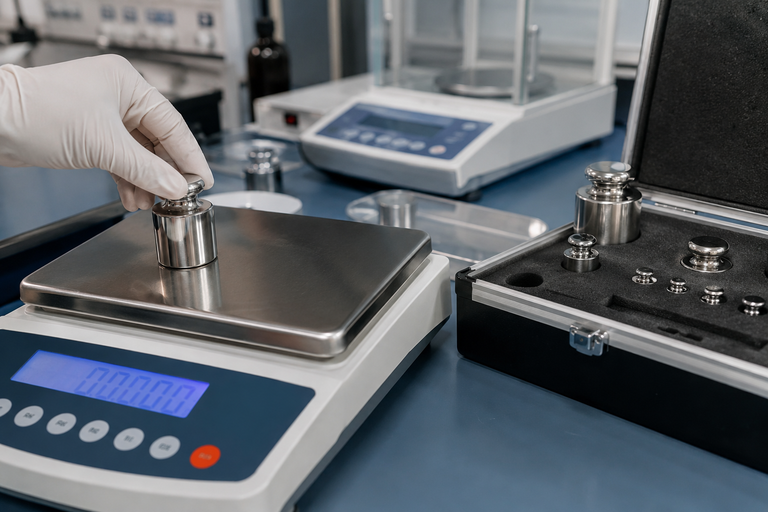
A skilled calibrator will most of the time:
Check out the gear
The tools are first checked to make sure they can be used for testing.
Choose the right measure to use.
The right measurement units or weights are picked based on the tools.
Check out the gear
The equipment is checked at the right places to measure.
See what happened.
These readings are compared with the numbers that are already known.
Take notes on the results.
It's written down what the calibration showed for your records.
Check to see how well your measuring tools are being used.
How Often Should You Calibrate Your Equipment?
There is more than one answer.
If a scale is only used occasionally and in a controlled environment, it may not need to be calibrated as often as equipment that is used constantly in a busy workplace.
How often you need to calibrate may depend on:
- How often do you use the gear?
- What kinds of tools were used?
- How you use it
- How important it is to match the sizes
- Results from a previous test
- What the manufacturer says
- How well your business does its job
- What the business needs
The best thing to do is make a tuning plan that works for your business and your tools.
Why Use a Professional Calibration Service?
There are times when it's not clear how to measure something.
Your tools may show a number that looks good, even if the readings are off by a small amount.
A professional calibration service will use the right standards and follow standard procedures to give you a more accurate way to check the accuracy of your gear.
It also gives you accurate records of the tuning that you can keep.
When a company needs certified calibration services, they can feel safer when they work with an ISO/IEC 17025 certified calibration provider.
There is a service in the UAE for mass calibration.
Falcon Calibration helps businesses make sure that their measuring tools are always accurate and dependable.
Mass Calibration Services in the UAEcan help a lot of different kinds of tools used in many fields to weigh and measure mass.
Here are some of them:
- Oil and gas
- Making medicines
- Things to eat and drink
- Power and Chemicals
- Carrying out tests and research
We can help you figure out how to set up a mass flow meter, scale, balance, reference weight, or any other measurement tool.
Don't wait until something goes wrong to do something.
You don't have to wait until your scale gives you a truly inaccurate number.
It's easier to find problems with your readings when you do them more often, and you can trust the numbers you use every day.
Because having the right measures helps you make better decisions in the long run.
Now could be a good time to adjust your tools if they need it.
Need to Set Up a Mass in the UAE?
You need to make sure that the scales you use give you correct numbers.
Contact Falcon Calibration right away about your tools and get a price quote for calibration.